Hugel

Hugel is a South Korean medical-aesthetics company with a botulinum toxin type A portfolio centered on Botulax and Letybo. Its toxin business connects Korean manufacturing, Botulax domestic-market identity, Letybo international-market identity, and the expansion of Korea-origin type A products into the United States, Europe, China, and other regions.
Botulax and Letybo are related Hugel toxin names rather than a simple global synonym with one universal label. Product names, approved indications, vial strengths, distribution partners, and prescribing information differ by country.
Quick Answers
Section titled “Quick Answers”| Common question | Short answer |
|---|---|
| Who makes Letybo? | Letybo is the U.S.-approved letibotulinumtoxinA-wlbg product from Hugel. The U.S. FDA approval date was February 29, 2024, and the U.S. label is limited to glabellar lines in adults. |
| What is the relationship between Botulax and Letybo? | Botulax is Hugel’s Korean and export-associated toxin name; Letybo is the internationally visible name used for the U.S. product and other markets. The names should not be read as one universal label. |
| Is Botulax FDA approved in the United States? | The current U.S. label is Letybo, not Botulax. U.S. interpretation should start with the Letybo prescribing information rather than Korean Botulax approval history. |
| Are regional Hugel toxin names interchangeable? | No. Botulax, Letybo, Aestox, Hugeltox, and other regional names can point to Hugel-related market identities, but approval status, indications, units, and product information remain local. |
Reference card
Section titled “Reference card”| Field | Reference point |
|---|---|
| Company | Hugel Inc. |
| Base | South Korea |
| Website | hugel-inc.com |
| Listing status | KOSDAQ-listed; ticker code 145020:KOSDAQ |
| Manufacturing footprint | Hugel lists its head office and Geodu Factory in Chuncheon and a Seoul office in Gangnam. |
| Core toxin relationship | Developer and manufacturer of botulinum toxin type A products |
| Main toxin names | Botulax, Letybo |
| Comparison anchors | Botox, Dysport, Xeomin, Jeuveau, and Daxxify |
| Unit context | Letybo’s U.S. labeling states that its potency units are specific to its preparation and assay and are not interchangeable with other botulinum toxin products. |
Related People
Section titled “Related People”| Person | Why the relationship matters |
|---|---|
| Daniel Chang | Hugel Korea leadership node, useful for connecting Korean company context to Botulax / Letybo global expansion and Korea-origin toxin manufacturing. |
| Carrie Strom | Hugel’s President and Global Chief Executive Officer, connecting Hugel’s global expansion with earlier Allergan Aesthetics leadership experience around Botox Cosmetic and other aesthetic products. |
Selected history
Section titled “Selected history”-
2001: company founding Hugel describes its medical-aesthetics business as beginning in 2001 and later expanding from botulinum toxin into fillers, skin boosters, sutures, and cosmetics.
-
2010-2019: Botulax indication expansion in Korea Hugel R&D materials list HG 101, identified as Botulax, with Korean approval milestones for eyelid spasm in 2010, glabellar lines in 2012, upper-limb muscle stiffness after stroke and equinus foot in cerebral palsy in 2016, and eye wrinkles in 2019.
-
2022: broader international Letybo approvals Australian regulator records list Letybo registration in 2022 for temporary improvement of moderate to severe glabellar frown lines in adults. Hugel company materials also describe European and other international authorization activity, while each market keeps its own product information.
-
2024: U.S. FDA approval for Letybo FDA records list Letybo, letibotulinumtoxinA-wlbg, as approved on February 29, 2024 for temporary improvement in the appearance of moderate to severe glabellar lines in adults.
Product portfolio
Section titled “Product portfolio”Hugel’s botulinum toxin business is centered on a type A product line presented through different names across markets. The portfolio is most useful as a map of product identity and regulatory context, not as a ranking against Botox, Dysport, Xeomin, Jeuveau, Daxxify, or other type A products.
| Product name | Main context | Presentation / label context | Market and approval boundary |
|---|---|---|---|
| Botulax | Hugel’s Korean and export-associated botulinum toxin type A name. | Hugel R&D materials identify HG 101 as Botulax and list Korean indication milestones from 2010 onward. | Korean approval history does not automatically transfer to other countries or to the Letybo label used elsewhere. |
| Letybo | International market name used for Hugel’s letibotulinumtoxinA product, including the U.S. product. | U.S. labeling describes Letybo as letibotulinumtoxinA-wlbg for injection, supplied as lyophilized powder for intramuscular use. | U.S. approval is for glabellar lines in adults; units and indications remain product- and market-specific. |
Botulax
Section titled “Botulax”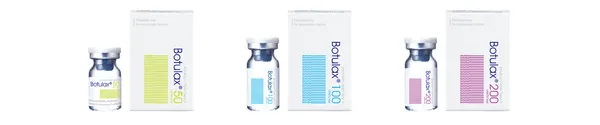
Botulax is the Hugel toxin name most closely tied to the company’s Korean approval and manufacturing history. Hugel’s R&D materials identify Botulax as HG 101 and list approved Korean indication milestones beginning with eyelid spasm in 2010 and glabellar lines in 2012.
That history makes Botulax important to the Korean botulinum toxin ecosystem, but it should not be used as a shortcut for global approval status. A product that is approved or marketed in Korea can have different labeling, indication language, vial presentations, and commercial names elsewhere.
Letybo
Section titled “Letybo”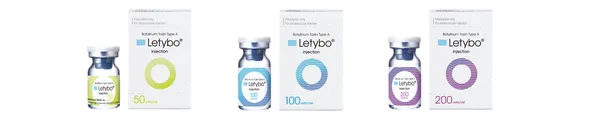
Letybo is Hugel’s internationally visible type A toxin name and the name used in the current U.S. product label. In the United States, Letybo is letibotulinumtoxinA-wlbg and is indicated for temporary improvement in the appearance of moderate to severe glabellar lines associated with corrugator and/or procerus muscle activity in adult patients.
The U.S. label is also a useful unit-safety anchor. It states that Letybo potency units are specific to the product’s preparation and assay and cannot be compared with or converted into units of another botulinum toxin product. That warning matters because Letybo may appear in the same comparison conversations as Botox, Dysport, Xeomin, Daxxify, or Jeuveau, but shared type A biology does not create a shared dose scale.
Hugel and regional materials associate Letybo or related Hugel toxin commercialization with several market-facing names, including Aestox in Thailand and Hugeltox in the Philippines, with other names such as Magnion, Reage, and Juvenlife appearing in parts of Central and South America. Those names are useful for market mapping only; they do not establish identical labels, indications, or availability across countries.
Manufacturing and office sites
Section titled “Manufacturing and office sites”Hugel’s listed Korean sites connect the company to both manufacturing and business coordination. Company statements about cGMP-based systems, KGMP certification, or adherence to international GMP standards are manufacturing-quality context, not automatic evidence of every regulator’s product approval in every market.
Head office and Geodu Factory: Chuncheon
Section titled “Head office and Geodu Factory: Chuncheon”Hugel describes the Geodu site in Chuncheon as a botulinum toxin production facility capable of manufacturing both drug substance and drug product. The company states that the facility was certified with Korea’s KGMP in 2016 and is operated based on cGMP standards.
Location: 23, Geodudanji 1-gil, Dongnae-myeon, Chuncheon-si, Gangwon-do, Republic of Korea.
Seoul Office: Gangnam
Section titled “Seoul Office: Gangnam”Hugel lists a Seoul office in Gangnam, separate from the Chuncheon head office and manufacturing site.
Location: 17, Samseong-ro 133-gil, Gangnam-gu, Seoul, Republic of Korea.
Market role
Section titled “Market role”Hugel is one of the clearest examples of Korea-origin botulinum toxin manufacturing becoming part of the global aesthetic-toxin market. Alongside Daewoong Pharmaceutical and Medytox, it shows how Korean companies now shape product availability, export naming, regulatory filings, and comparison conversations beyond Korea.
Carrie Strom, Hugel’s President and Global Chief Executive Officer, adds a leadership link between Hugel’s global expansion and earlier Allergan Aesthetics experience with Botox Cosmetic and other aesthetic products.
Hugel adds another major type A product family to a market often framed around older Western brands. That does not mean Letybo or Botulax is unit-equivalent, clinically interchangeable, longer-lasting, safer, or superior to another botulinum toxin product.
Regulatory and market interpretation
Section titled “Regulatory and market interpretation”Letybo’s U.S. approval gives Hugel a concrete U.S. label anchor, but the approved use is narrow: temporary improvement of moderate to severe glabellar lines in adults. Other treatment contexts, regions, or names require separate local product information rather than assumptions based on the broader Hugel portfolio.
Hugel’s international footprint also illustrates why product-name interpretation matters. Botulax, Letybo, Aestox, Hugeltox, and other names may appear in related commercial discussions, but readers should distinguish company identity, product identity, local approval, and prescribing label before making comparisons.
Comparison limits
Section titled “Comparison limits”- Botulax and Letybo should not be treated as automatically identical across all regulatory markets.
- Letybo units are not interchangeable with units of Botox, Dysport, Xeomin, Jeuveau, Daxxify, or other botulinum toxin products.
- A manufacturing-quality statement does not by itself establish product approval in a specific country.
- Export names and regional names are market identifiers, not evidence of clinical equivalence.
- U.S. Letybo interpretation should stay tied to the current FDA-approved prescribing information.
References
Section titled “References”- Hugel official website
- Hugel company overview and global presence
- Hugel R&D status
- Hugel quality and manufacturing information
- Hugel: Carrie Strom appointed President and Global Chief Executive Officer
- DailyMed: LETYBO prescribing information
- FDA Drug Trials Snapshot: LETYBO
- Therapeutic Goods Administration: Letybo